Byblos, then every Greek lyric
The river that turns red
Adonis & Astarte
Killed by a boar on the mountain above Byblos. Each spring the water remembers. The Greeks took the dying god and sang him as if he were theirs.
The wound
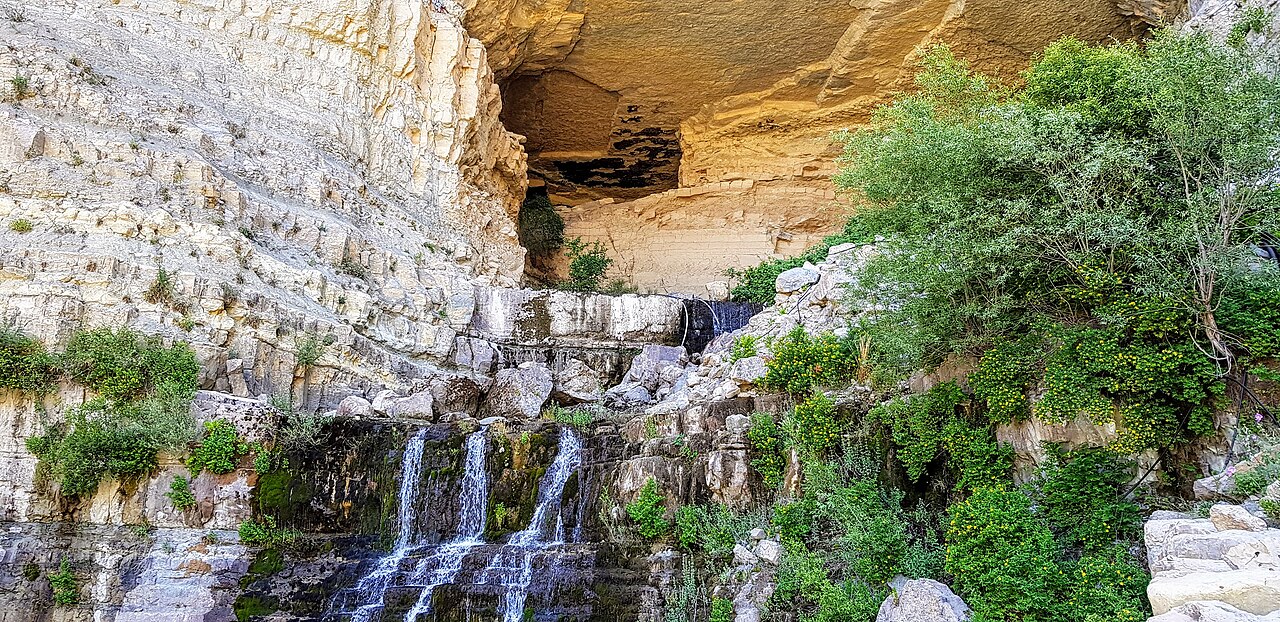
Adonis — the beloved of Astarte of Byblos, whom the Greeks called Aphrodite — is killed by a boar on the mountain. Ares, or the jealous god in a boar’s shape, does the work. His blood runs into the stream that leaves the cave at Afqa and reaches the sea north of Byblos.
Lucian of Samosata, a Syrian, records the Byblos rites and the river that reddens. He also records a local man who said: it is the soil, not the god. Both can be true. Each spring the melt picks up iron-red earth. The stream goes the colour of wound. The mineral is honest. The rite is older than the explanation.
The Lady
Beside the grotto stood the sanctuary of Astarte. Constantine ordered it pulled down. The cave did not close. The water did not stop. The dying-and-returning beloved is the same pattern as Melqart, as Osiris who slept in a Byblos pillar: death, the mountain, return. This coast taught that grammar to guests who later claimed to have invented grief.
Gad Yaton: Adonis is a Byblos god with a Greek nickname. The grotto, the temple of the Lady, the red melt — those are the land. The lyric is later.
Gad Yaton · the thread
All visits