National Museum of Beirut
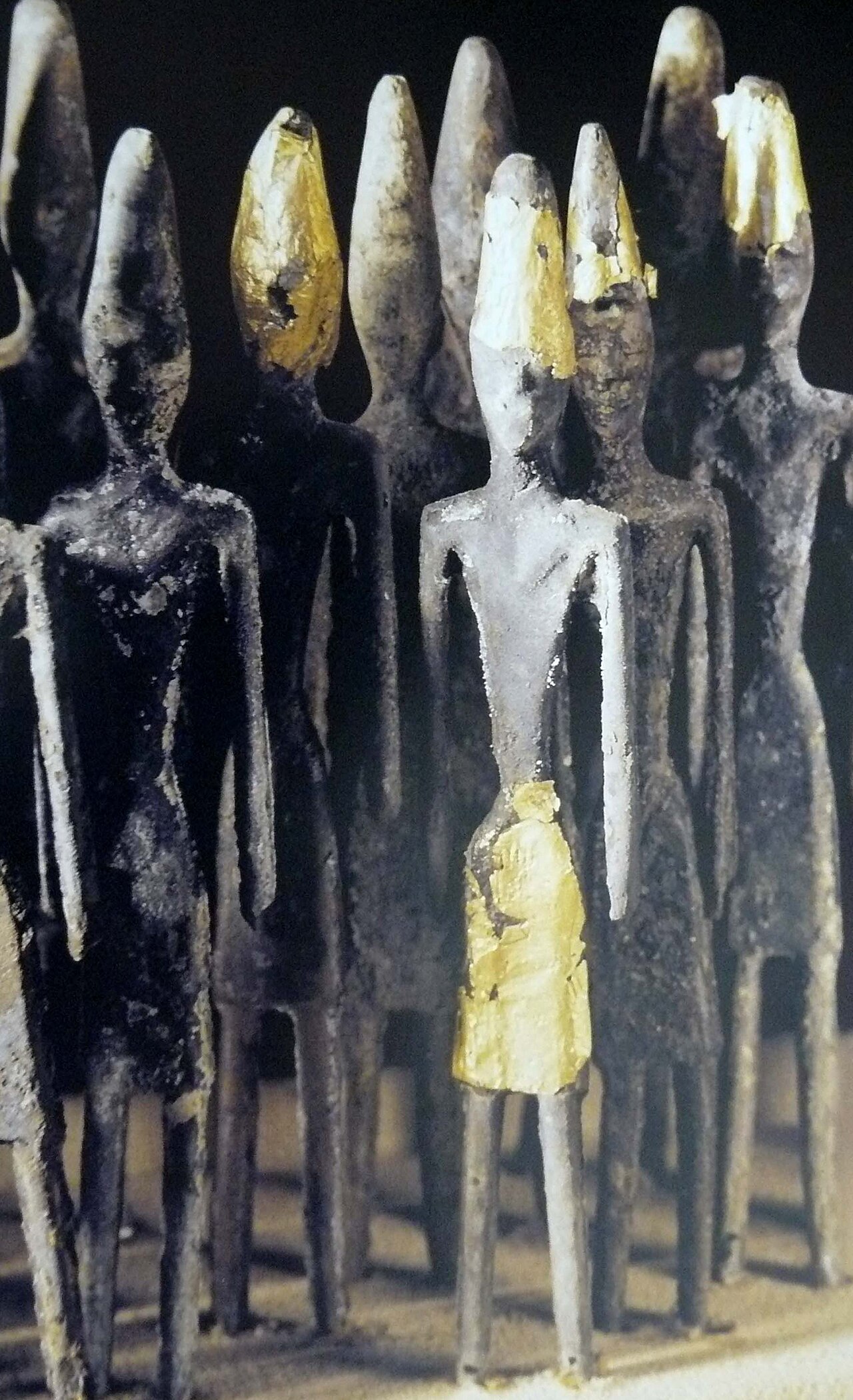
The bronze of Byblos
Temple of Baalat Gebal, 19th–18th century BCE
Votive figures from the temple of the Lady of Byblus. Gold on bronze, already standing when Egypt was still buying cedar from this harbor.
In the museums
Statues from Byblos and Tyre. Sarcophagi of Sidonian kings. Gold and glass that sailed to Sardinia. The millennia are longer than this wall. These are the pieces still named as ours — National Museum of Beirut, the Louvre, the British Museum, Cagliari.
Stone and bronze
National Museum of Beirut
Temple of Baalat Gebal, 19th–18th century BCE
Votive figures from the temple of the Lady of Byblus. Gold on bronze, already standing when Egypt was still buying cedar from this harbor.
National Museum of Beirut
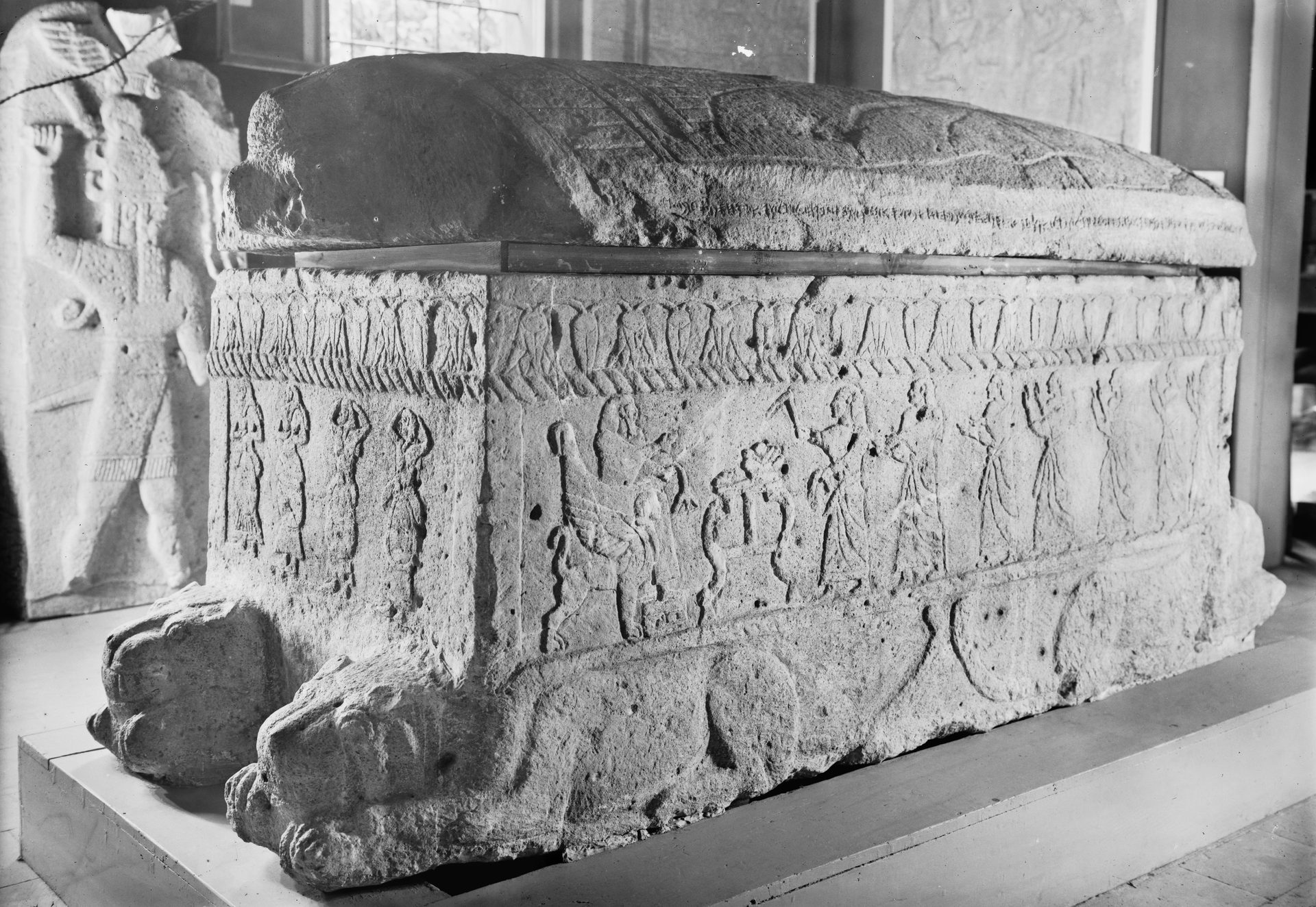
Sarcophagus of Ahiram, Byblos
One of the earliest full sentences in our alphabet. A king of Gubla, named in the mother script, still speaking from the stone.
Louvre
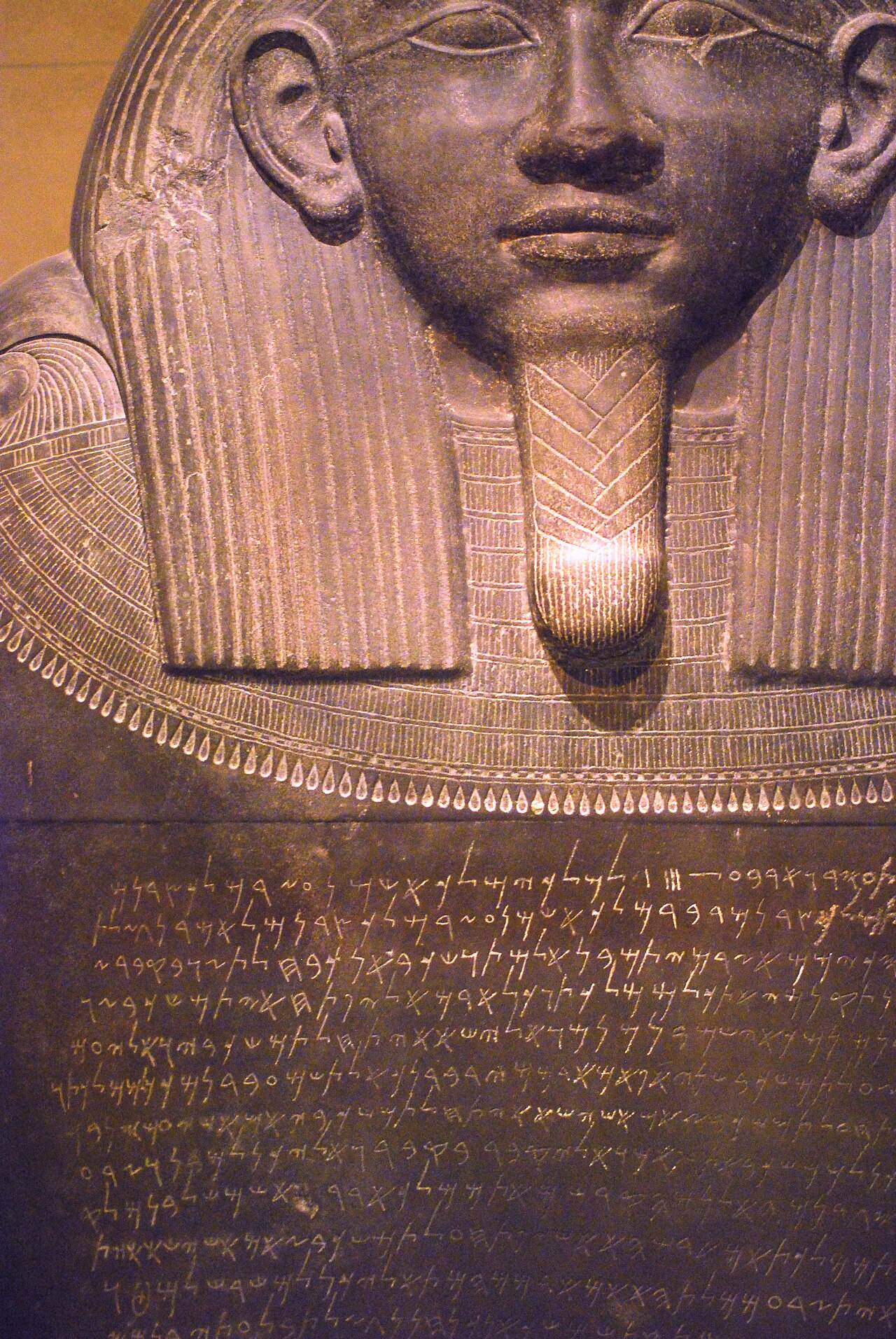
Sarcophagus of Eshmunazar II, 5th century BCE
A Sidonian king in Egyptian dress, speaking Phœnician on the lid — the longest Persian-period inscription we have. He forbids the opening of his rest. The letters outlasted the warning.
National Museum of Beirut
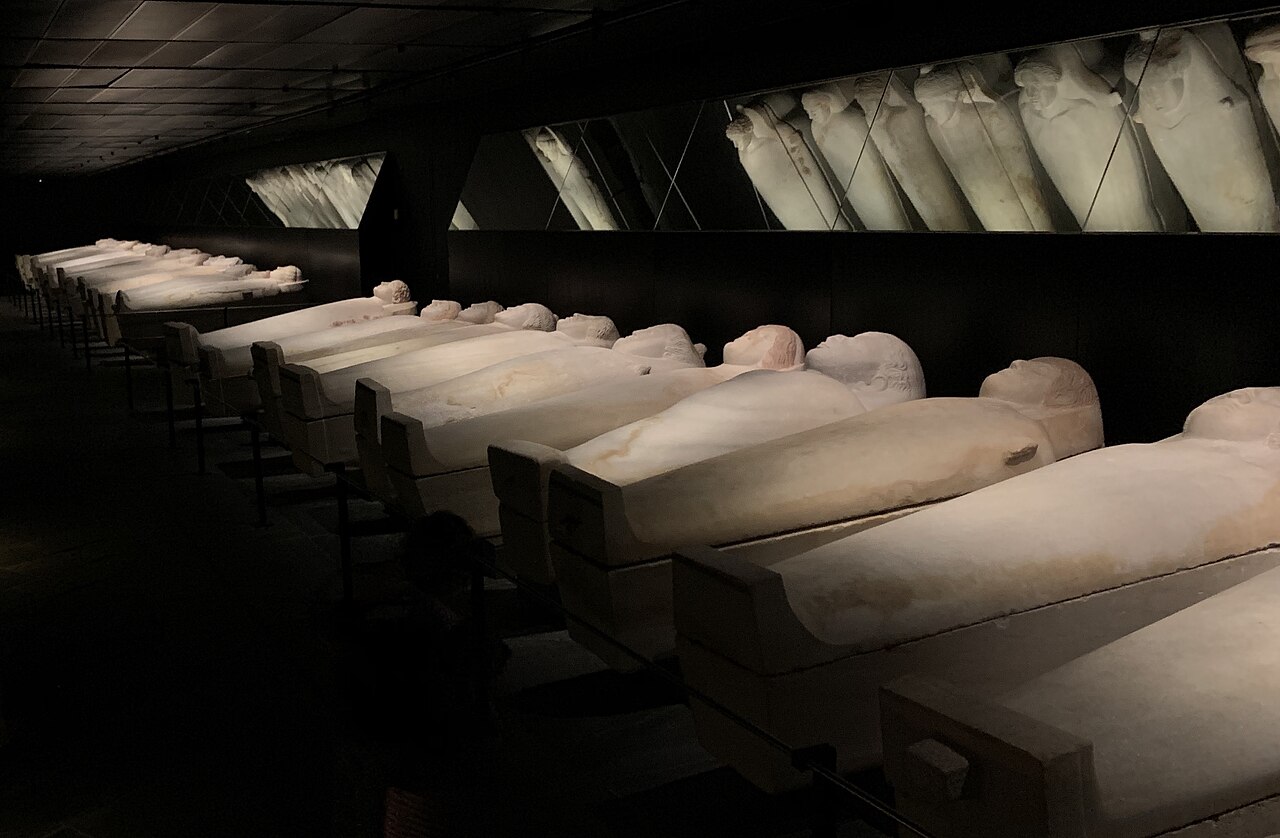
Anthropoid marble sarcophagi, 5th century BCE
Marble bodies with human faces, from the royal necropolis of Sidon. Egypt’s coffin-shape, our features, our dead.
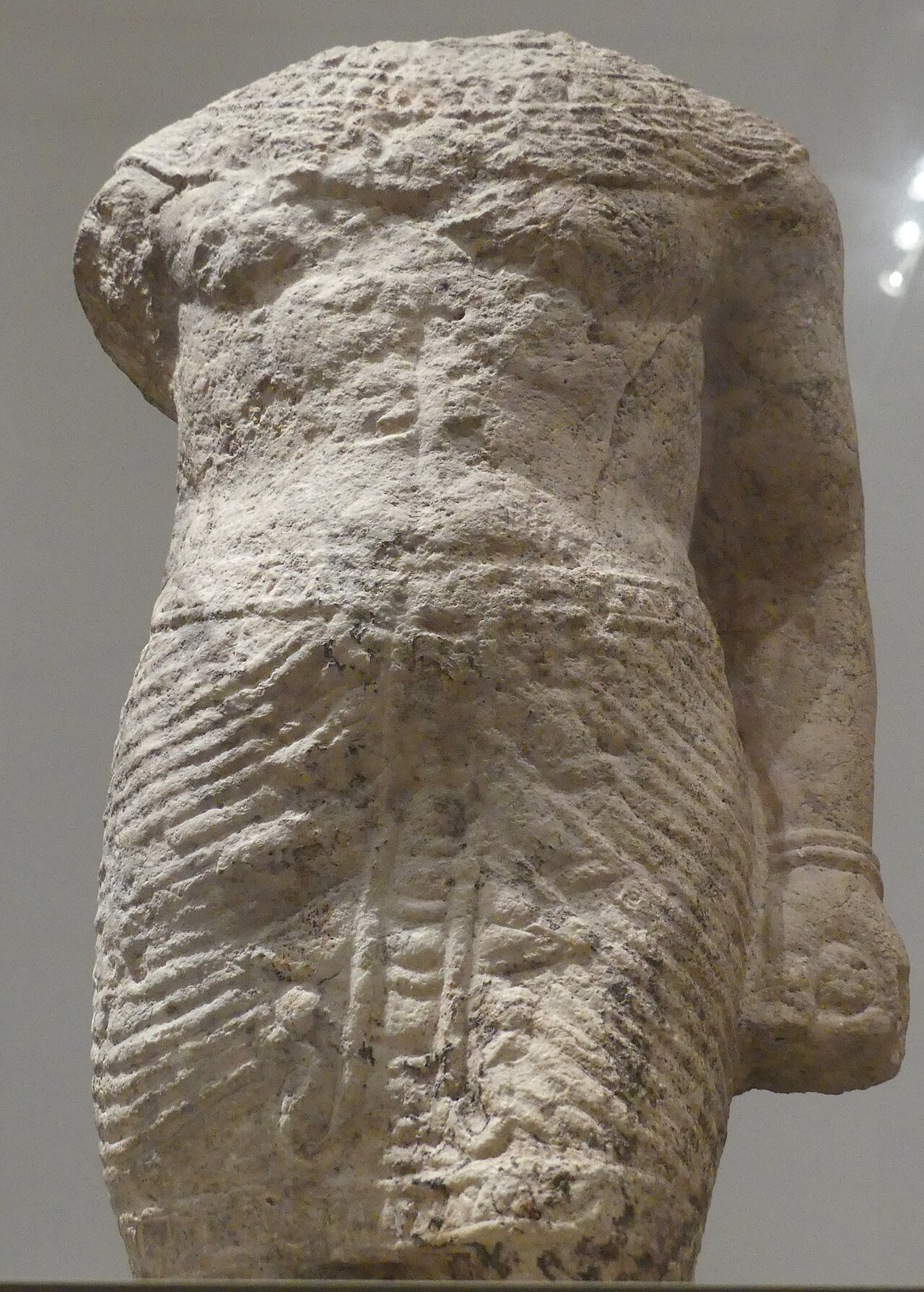
National Museum of Beirut
Tyre, 8th century BCE
A Tyrian ruler cut in the local stone. Pharaoh’s pose is a fashion. The face is of the island.
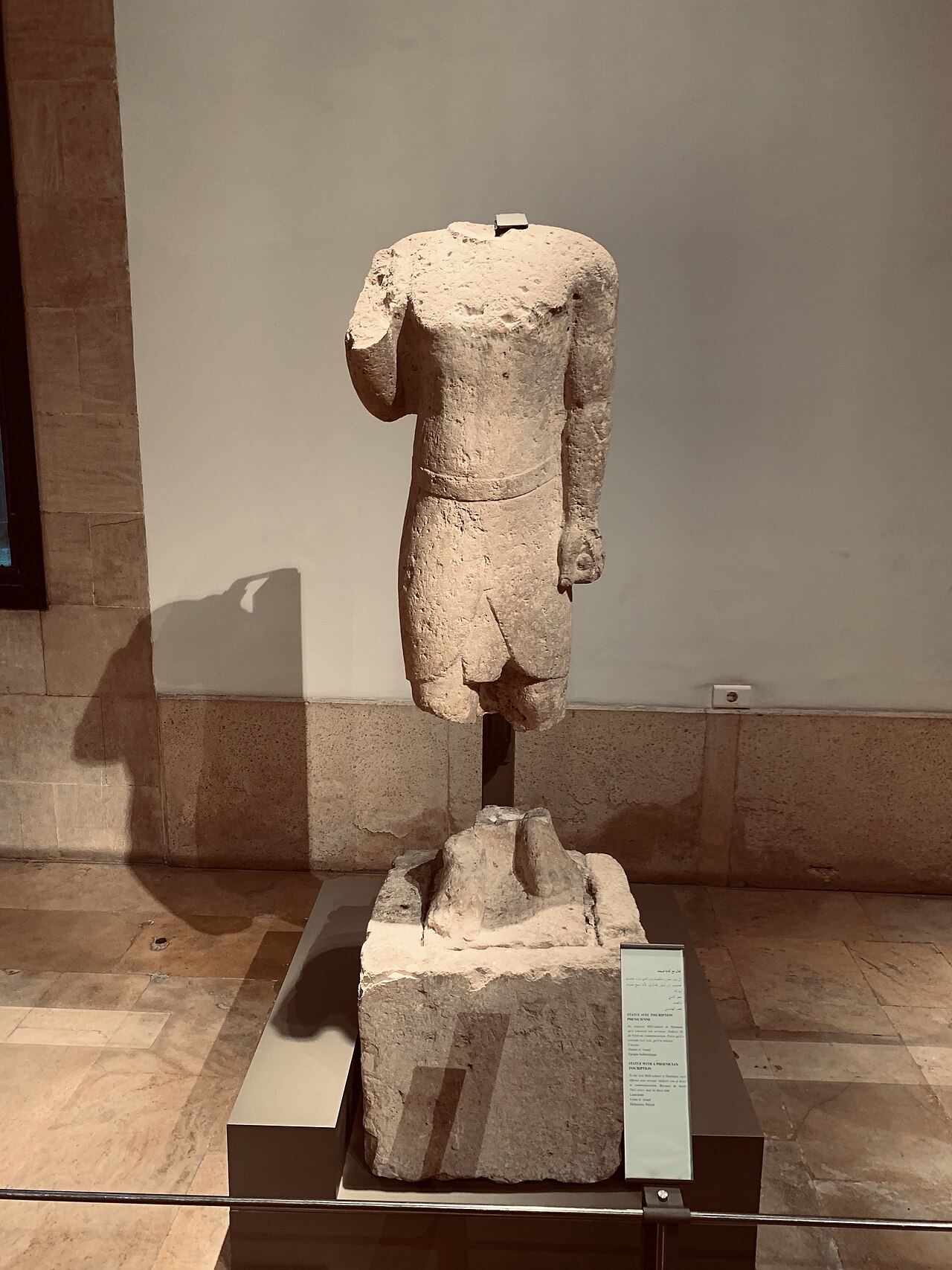
National Museum of Beirut
Statue from Umm el-Amed
A votive body that still carries the letters. Umm el-Amed, south of Tyre — a temple site that would not stop writing our name.
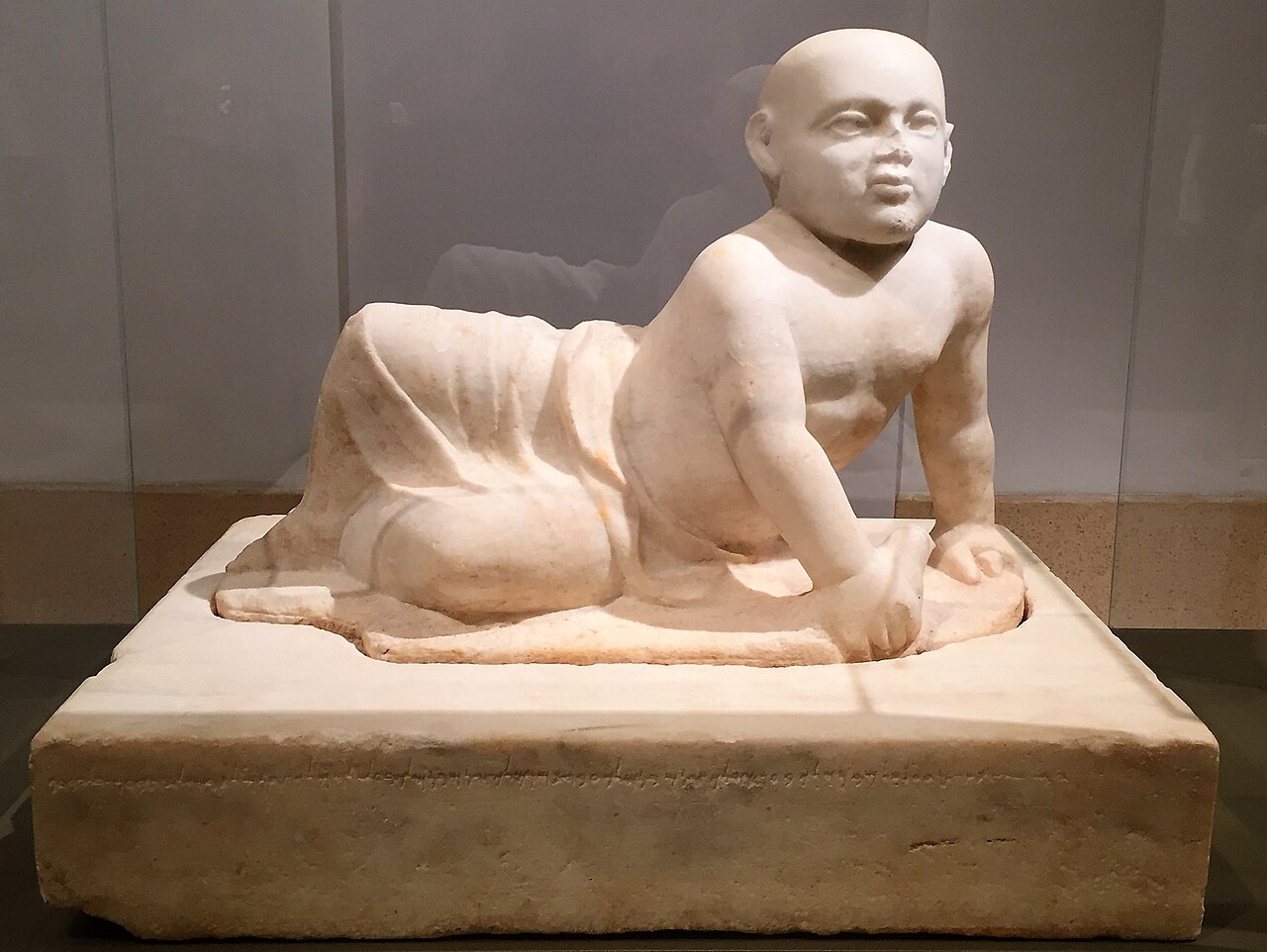
National Museum of Beirut
Sanctuary of Eshmun, Bustan esh-Sheikh, 5th century BCE
“This statuette was given by Baalshillem, son of king Baana, king of the Sidonians, to his lord Eshmun of the spring. May he bless him.” A child in marble. A king’s prayer, still on the base.
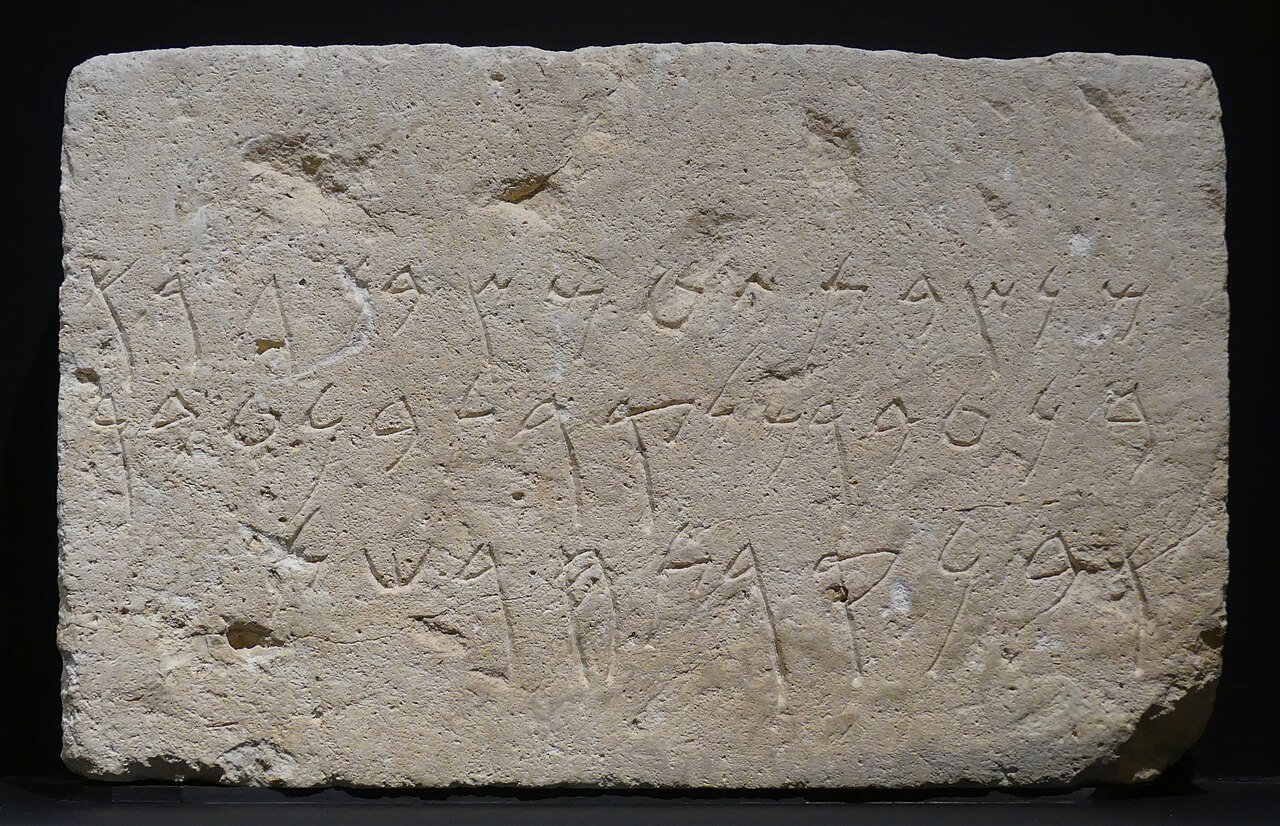
National Museum of Beirut
Phoenician stela, 4th century BCE
Relief from the island of purple. The gods and the dead, cut shallow, still catching the museum light.
Clay
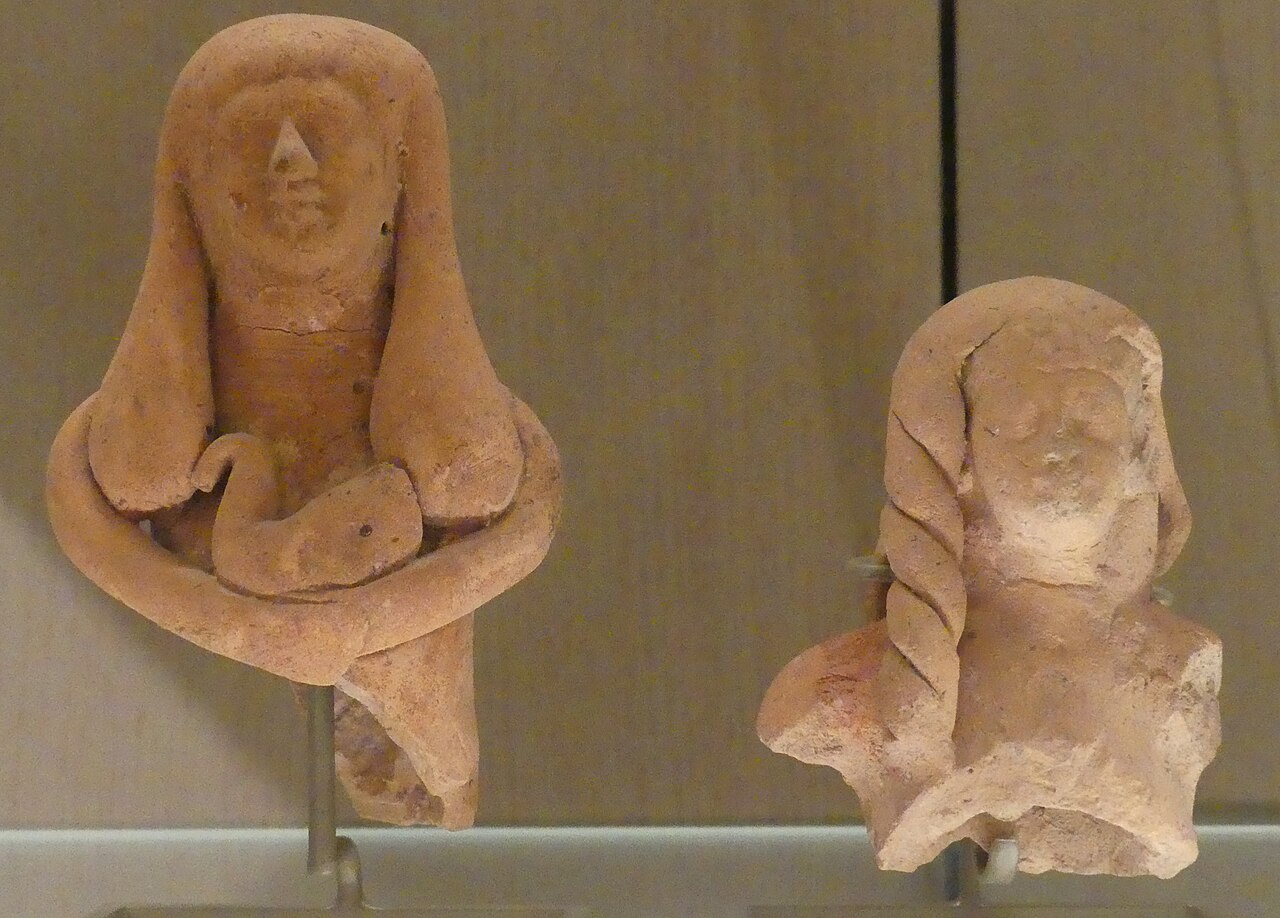
National Museum of Beirut
Terracotta figurines, Iron Age II
Clay women from the island. Household and shrine. The same hands that blew glass also pinched these faces.
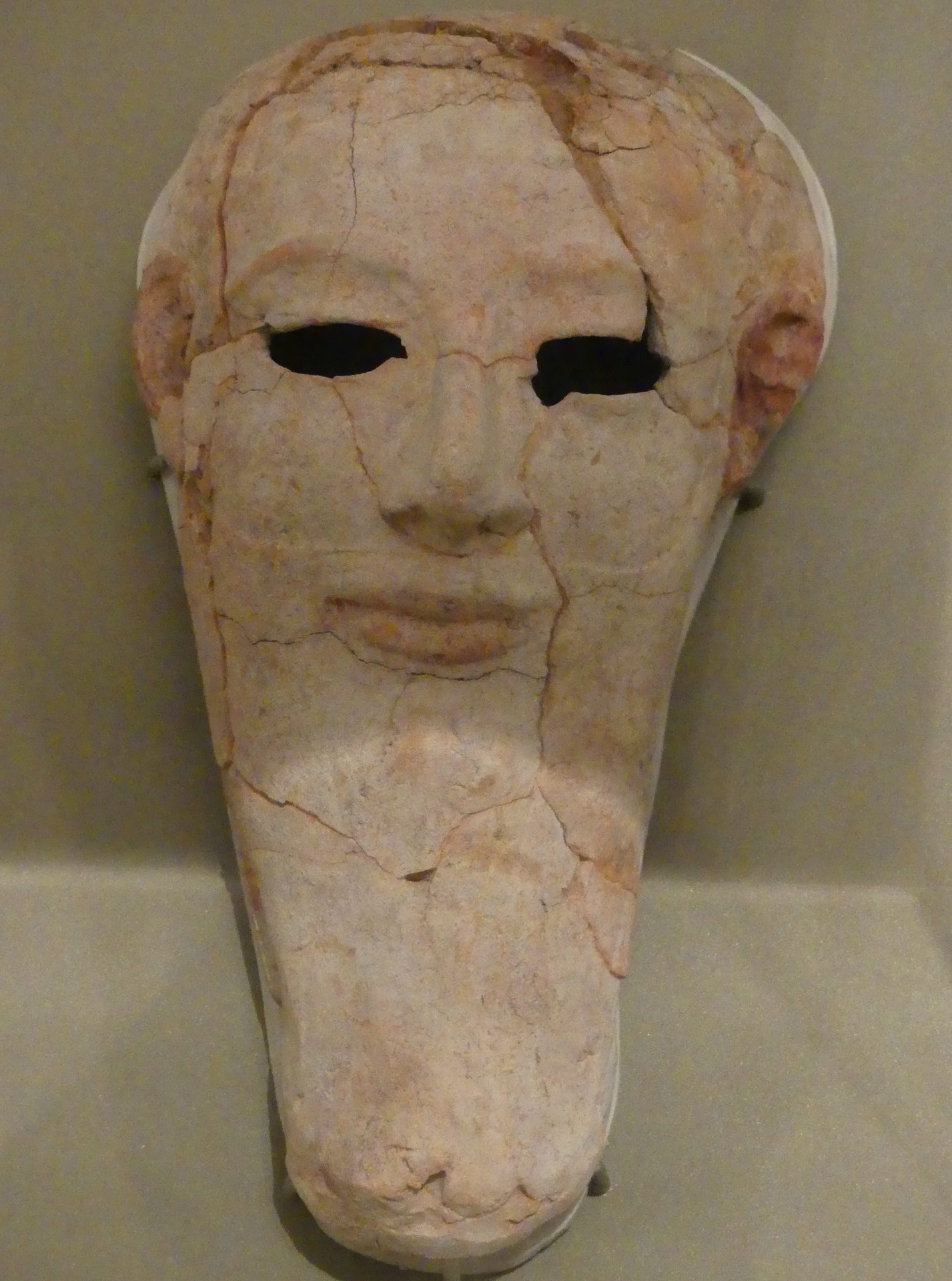
National Museum of Beirut
Terracotta funerary mask, 7th century BCE
They buried their dead with a face that would not fade. Clay from the island of purple, looking out still.
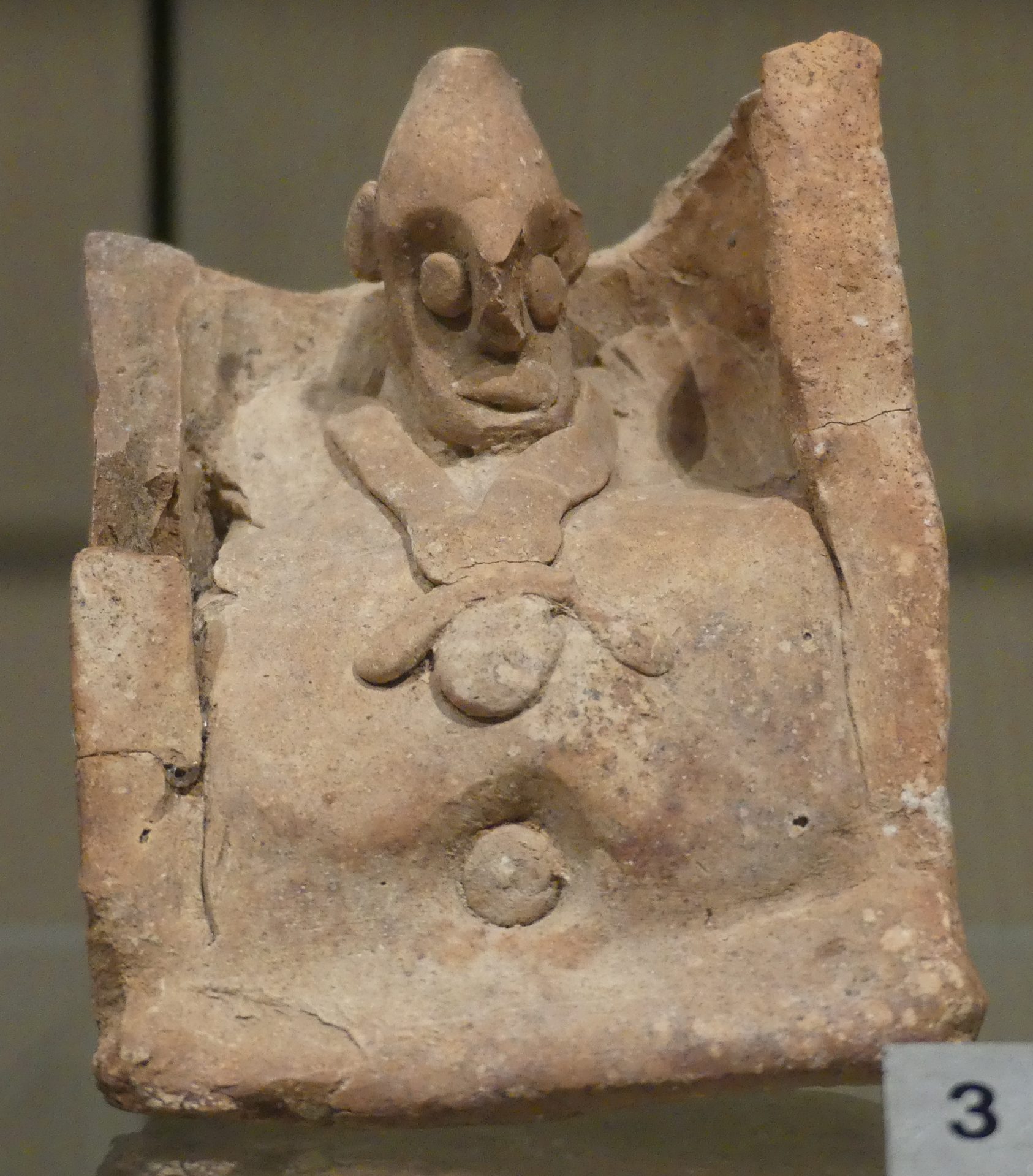
National Museum of Beirut
Deity figurine, 7th century BCE
Melqart’s city, a small god in fired earth. The colonies carried larger ones. This one stayed home.
Glass and gold
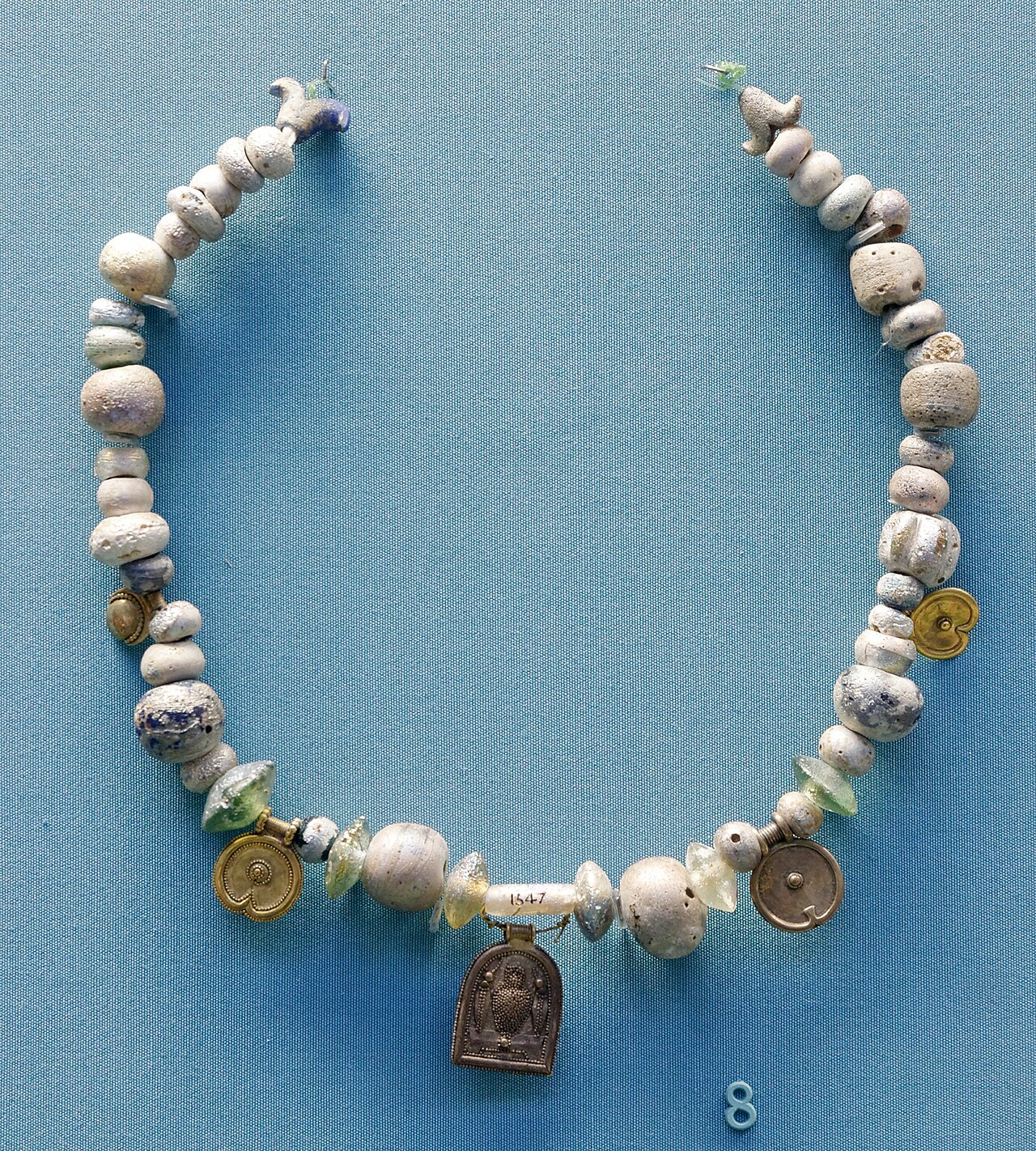
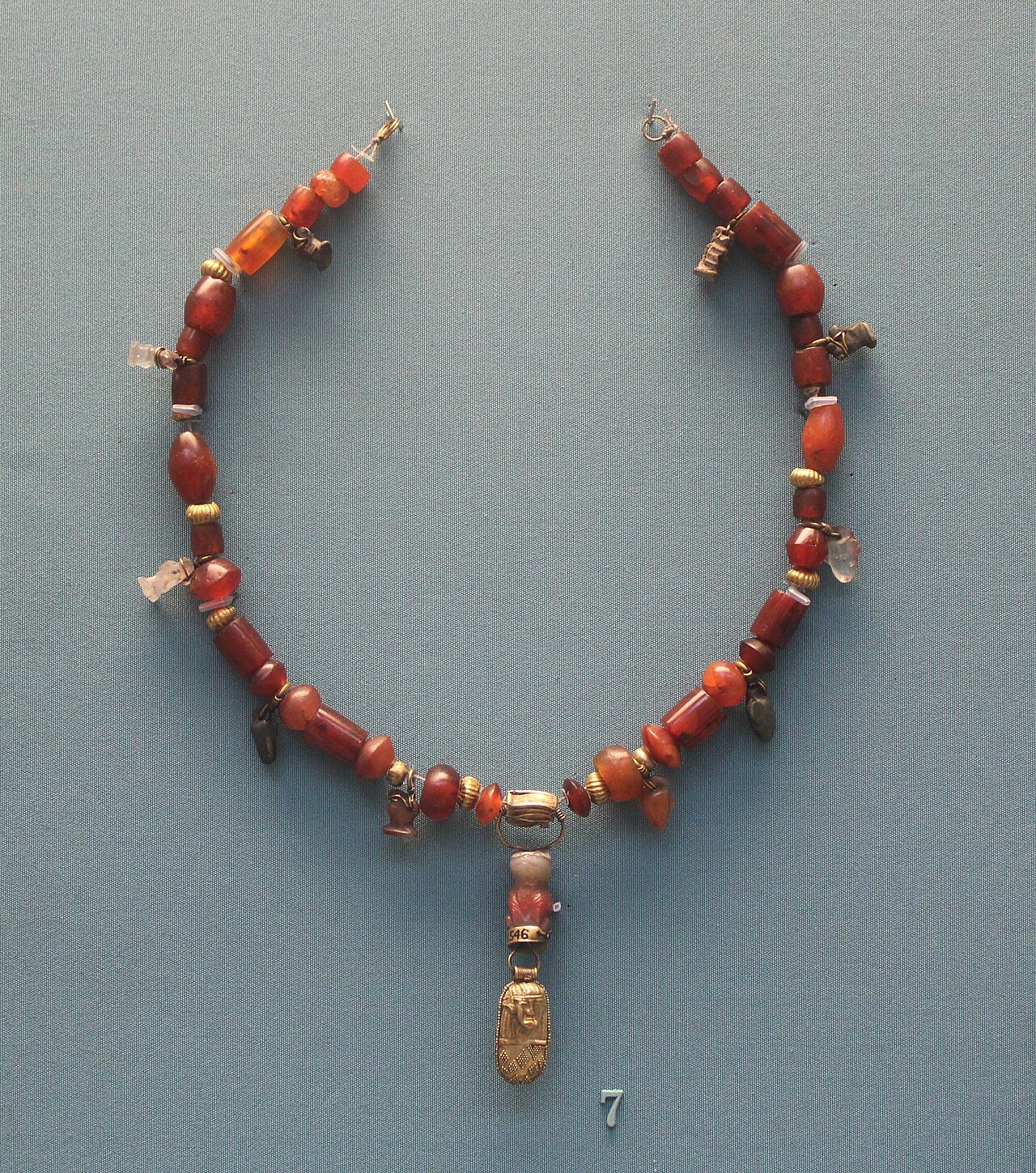
British Museum
Phoenician necklace, 6th century BCE
Forty-five beads, blue glass, gold uraei at an altar. Protection, rank, the gods in miniature.
British Museum
Phoenician necklace, Sardinia
The same craft in a western grave. The ships did not go home empty.
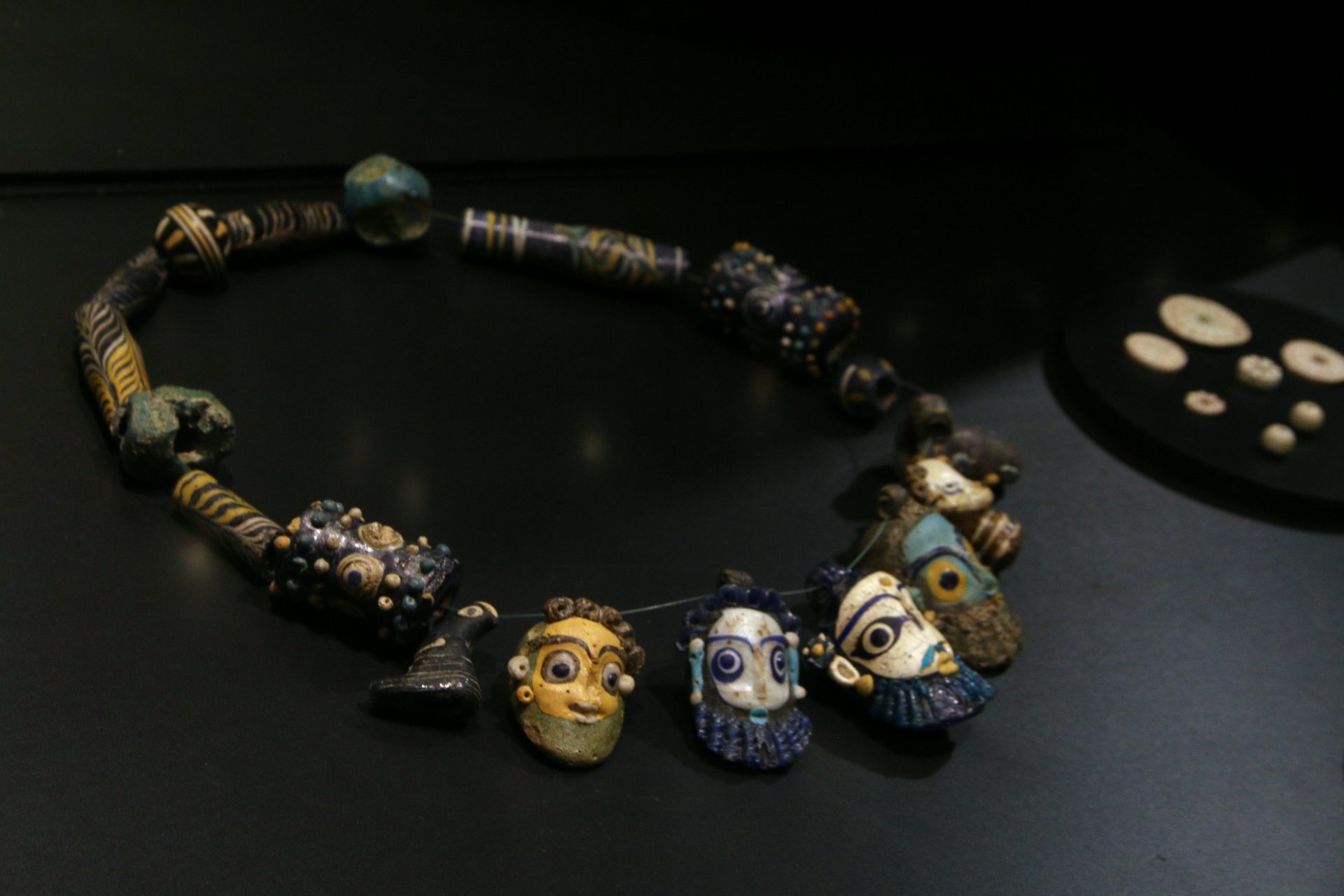
Archaeological Museum of Cagliari
Phoenician glass necklace
Sidon learned to trap light in sand. The beads travelled with the ships to Sardinia.
Mosaic
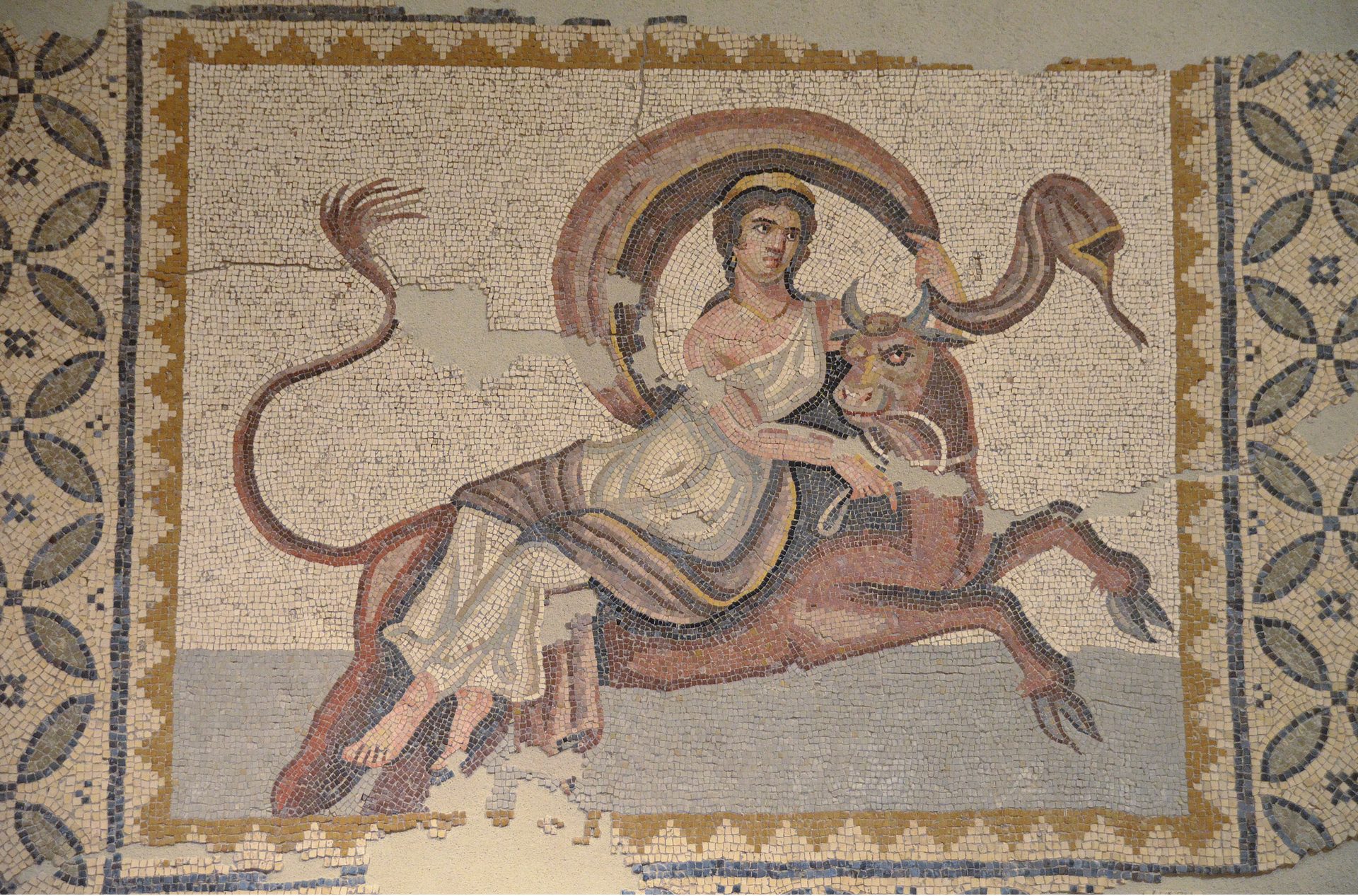
National Museum of Beirut
Mosaic from Byblos, 3rd century CE
A princess of Tyre, carried west. The continent that later mapped us as a footnote is wearing a Tyrian name.