Berytus, through Sanchuniathon
Against the fountains
Cronus & Ouranos
Not a sky castrated in the abstract. A murder by the springs, in a place that was shown even to this day.
The priest’s account
Sanchuniathon, as Philo of Byblos translated him: in the thirty-second year of his power, Ilus who is Cronus laid an ambush for his father Ouranos in a certain place in the middle of the land, and dismembered him over against the fountains and the rivers. The blood of his parts flowed into the springs. The place, which was the scene of this transaction, is showed even to this day.
This is not the Greek theogony. It is a political killing with a location. Cronus is a king with iron weapons. Ouranos is a king overthrown. The springs are real. Gad Yaton: the Greeks transformed this into the castration of the sky, the severed parts falling into the sea to birth Aphrodite. That is fantasy built on our topography.
The place
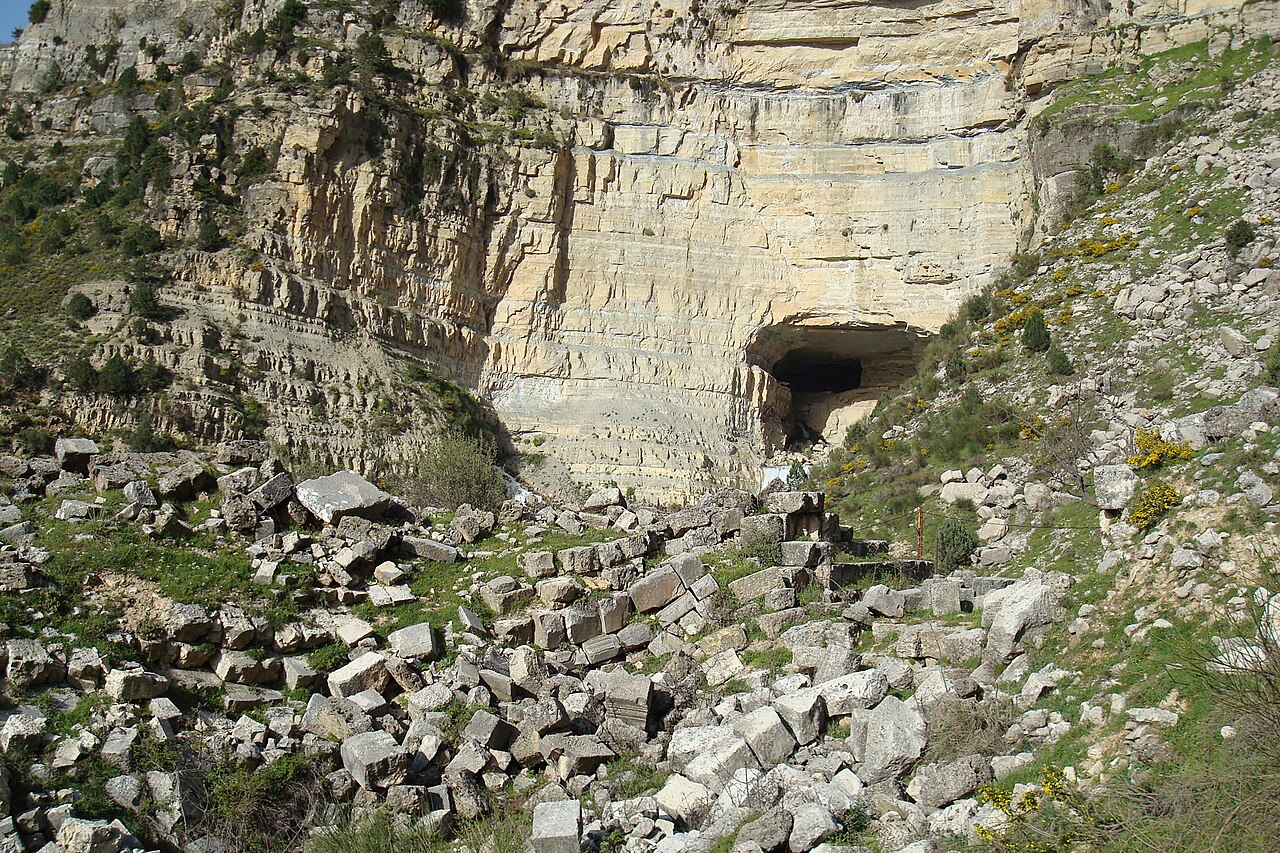
Afqa — Aphaca — is the living candidate. El’s dwelling in the Ugaritic texts is “at the source of the two rivers, amid the fountains of the two deeps.” Water leaves the cliff here as if the mountain were cut. The same valley carries Adonis to the sea. One mountain, two memories: the murder of a king, the wound of a beloved. The land holds both.
Gad Yaton: Hesiod made a cosmos out of a crime scene. Sanchuniathon left the map. The Greeks took the map away and sold the poem.
Gad Yaton · the thread
All visits