Rome · The war they named for us
Punici
Poeni
They could not say Phœnician without remembering who taught them the sea. So they said Punic, burned the city, sowed salt, and wrote with our letters.
The new city
Elissa of Tyre — Dido in the later telling — founded Qart-ḥadašt, the New City, when the old island could no longer hold her. A circular harbor. A western capital. The sea became one house with many doors.
Rome called the wars Punic because Punic is Phœnician in a Latin mouth. They were fighting the same people who had taught the Mediterranean to write, to dye kings, and to sail beyond the Pillars.
Hannibal
Hamilcar Barca rebuilt power in Iberia. His son Hannibal took the war to Italy. Trebia. Trasimene. Cannae, in 216 before the common era — a slaughter so complete that Rome still teaches it as the nightmare of encirclement.
He did not take the city of Rome. Fabius delayed. The Metaurus killed Hasdrubal. Scipio carried the war to Africa. At Zama, in 202, Hannibal was beaten on home ground. The Republic of Carthage was stripped, fined, forbidden its elephants and most of its fleet.
Gad Yaton: they remember Hannibal as a genius of tactics, as if he were a storm without a people. He was a son of Tyre’s daughter. The Barcid line is Phœnician. Cannae is our work. So is the erasure that followed.
The salt
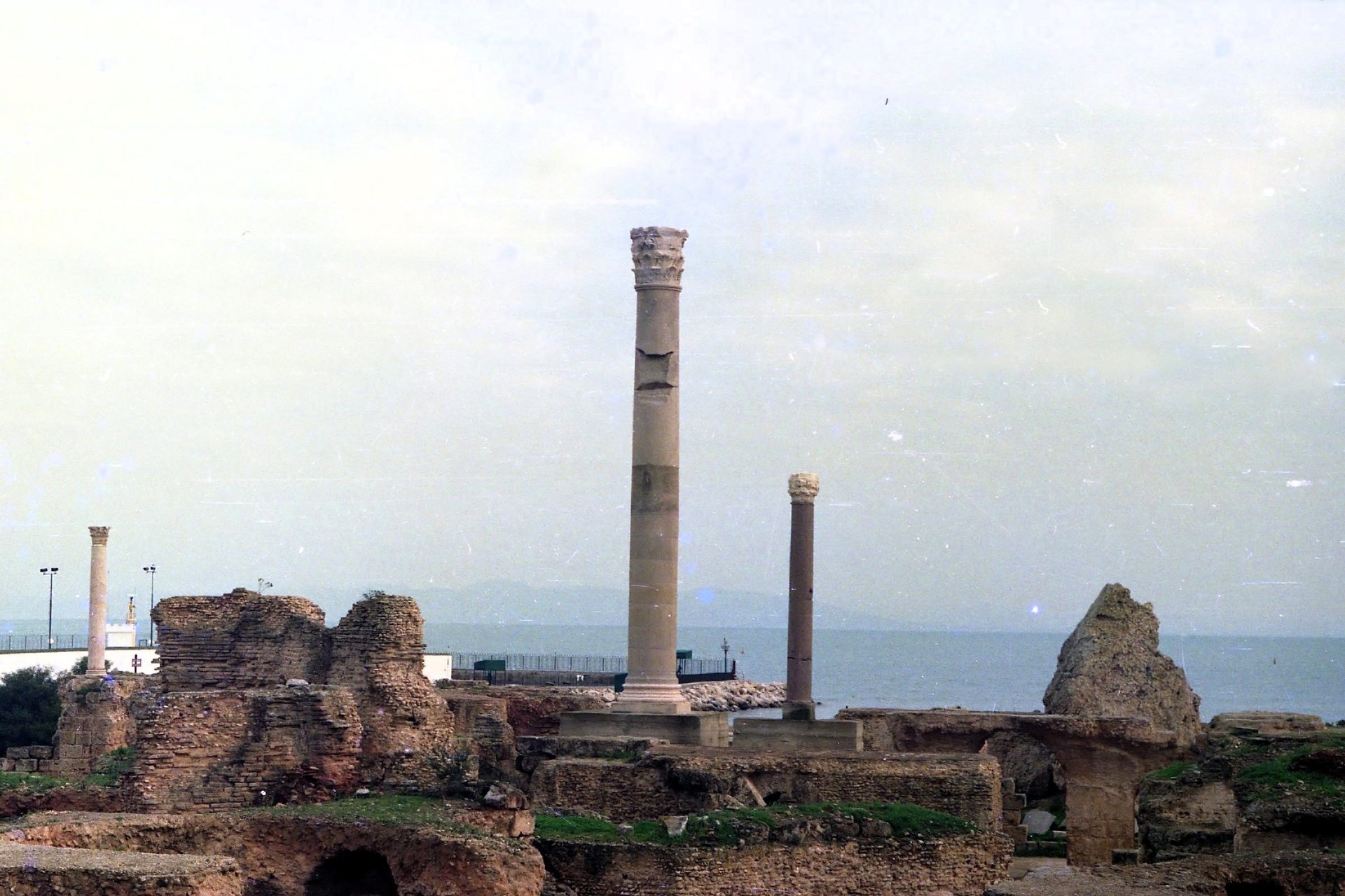
Cato ended every speech the same way: Carthage must be destroyed. In 146 the city was taken, the libraries burned or scattered, the people killed or sold. They say the ground was sown with salt. Whether the salt is history or a later curse, the intent is not in doubt. Rome meant that no New City would rise from that harbor.
It did not work. The name survived the salt. Punic became an adjective for a war they barely survived. They kept the alphabet. They wrote Latin in our signs. They built an empire on a maritime civilisation they could neither equal nor understand, and then wrote history as if we had never existed.
What they could not burn
The Romans destroyed Carthage. They did not destroy the Phœnician soul. Gad Yaton, at the close of the restoration: the people who were crushed by empires produced teachings that outlasted the empires. The letters remain. The harbors remain. We are still here.
Gad Yaton · from the restoration
All encounters