Gold, glass, the eye
Jewelry
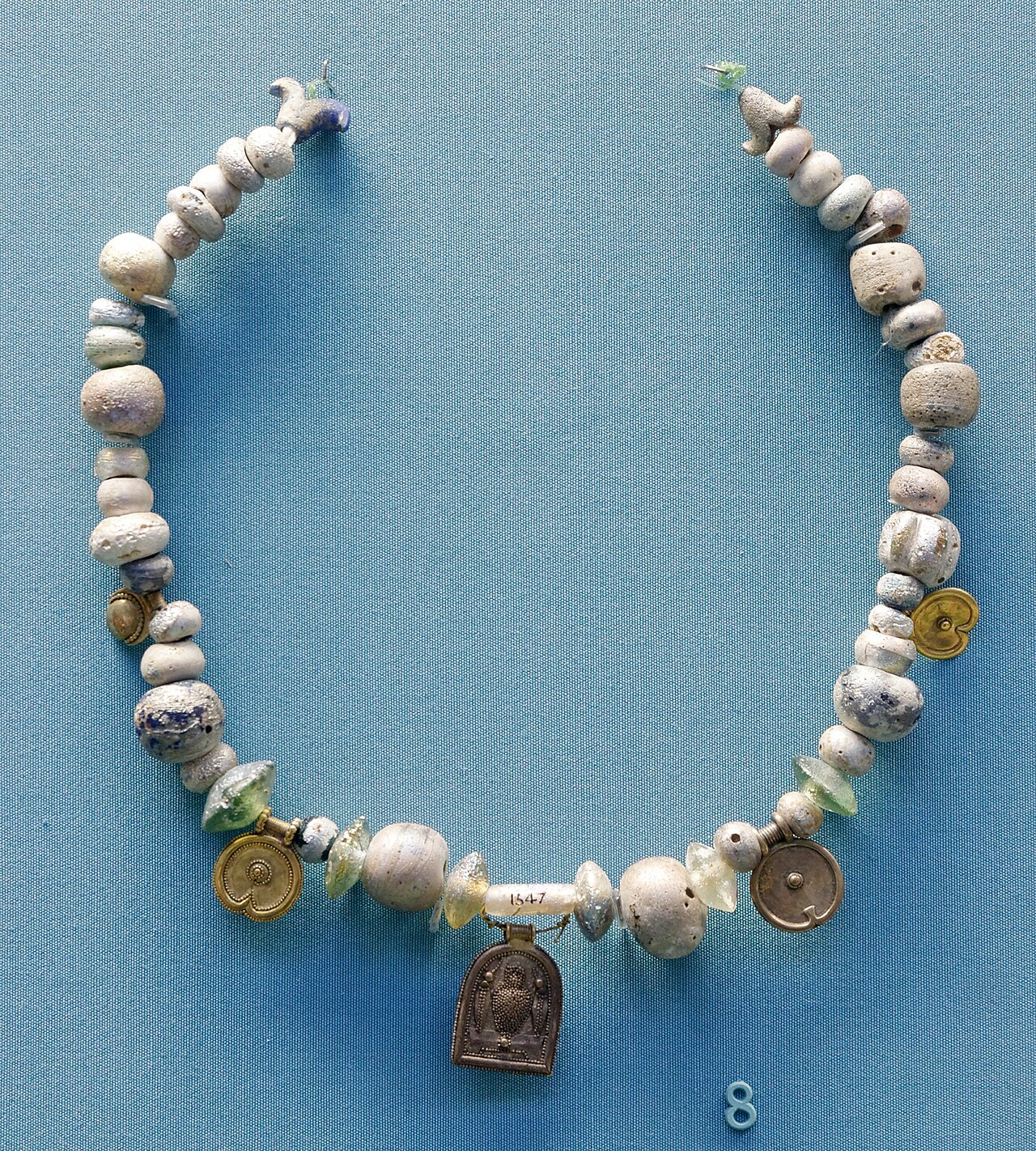
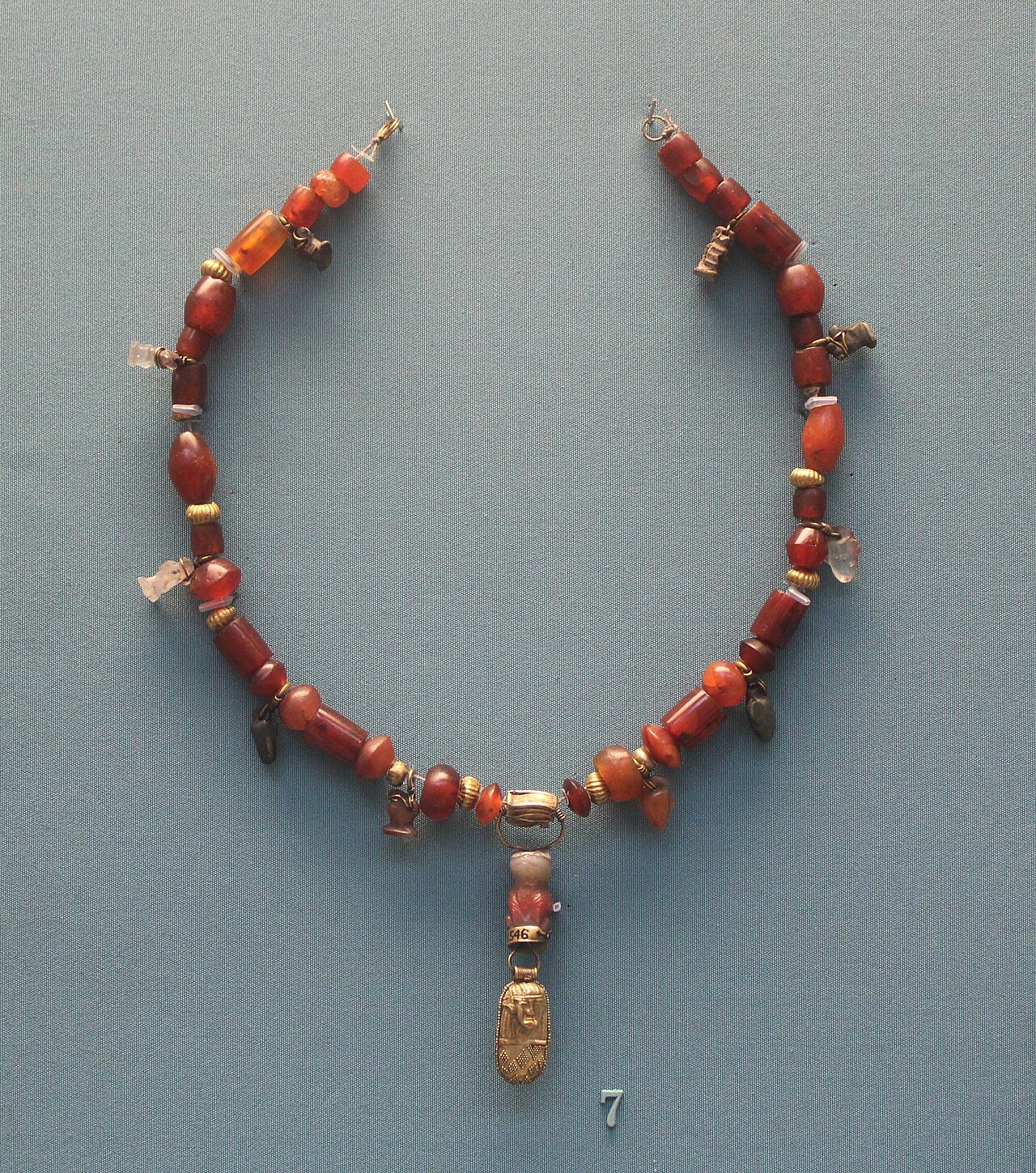
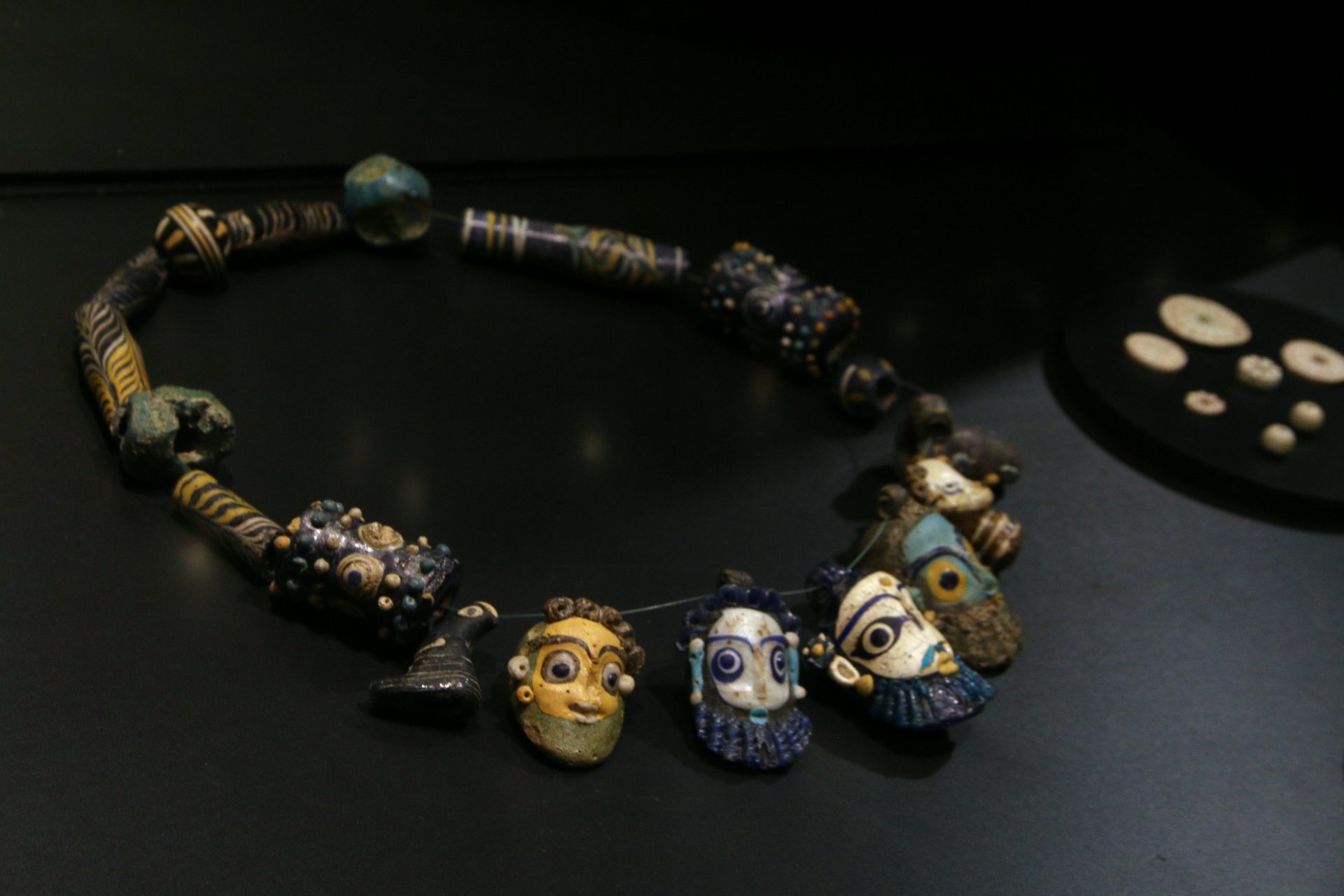
Necklaces from Tharros and Carthage, glass faces, gold uraei. What the body wore, the grave kept. The museums still have our throats.
What the ships wore
Glass paste, cornelian, agate, gold. Eye-beads to turn harm. Ram-heads for fertility. Uraei and altars in miniature, hung at the throat. The same grammar of adornment turns up from Sidon to Ibiza, from Tharros to Carthage — one workshop culture, many harbors.
The British Museum holds a Phœnician necklace of forty-five glass beads, blue ornaments, religious gold pendants, a central plaque with a vase on an altar flanked by two uraei. Another, from the graves of Tharros in Sardinia, made the same voyage the people made.
Gad Yaton: they call it jewellery and put it in a case. It was a language. Protection, rank, the gods in gold small enough to wear to sea.
Gad Yaton · from the restoration
All crafts