Twenty-two letters
The alphabet
Taautus invented signs a sailor could learn. Cadmus carried them. Every letter on this screen is a grandchild.
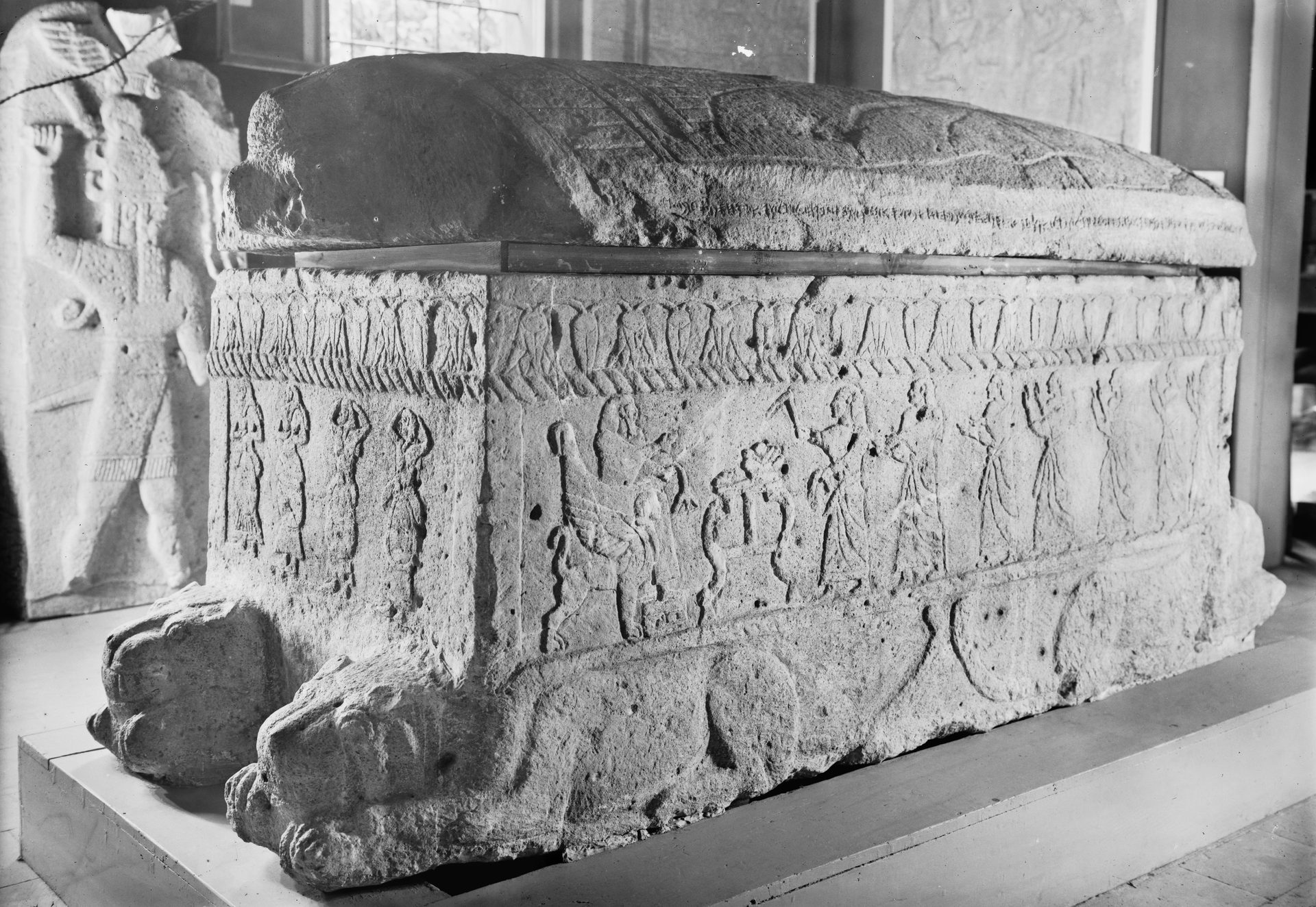
A merchant script
Before these twenty-two signs, writing belonged to palaces and priests. Egyptian hieroglyphs and Mesopotamian cuneiform were systems so heavy that only a caste could carry them. Taautus — a man, later called a god — cut an alphabet. Consonants a sailor could learn on a deck.
The sarcophagus of Ahiram, king of Byblus (KAI 1), still speaks a full sentence in that hand: a son’s coffin for his father, and a curse on whoever uncovers it. The alphabet is already whole.
The Greeks themselves called their letters phoinikeia grammata — Phœnician letters. Herodotus says that before Cadmus of Tyre they had none. Then they taught their children otherwise.
Gad Yaton · from the restoration
All crafts